I haven't posted the last few days because of general busyness and difficult wifi. But I'm back!
Still in Ephesus, this is from the lower part of the main stoa.
This next one is of a gate. Care to guess what it's called?
The
Hercules Gate! This is Hercules killing the Nemean Lion.
This next statue is of a wealthy man- a doctor, if my memory serves correctly. I asked why the head was missing, thinking there had been a riot or something, but the guide said it was only because the neck is the weakest part of the statue. He also mentioned that Ephesus is in an earthquake hotspot, so I wonder if that's why it has a lot of headless statues.
More pretty stonework:
These next ones are of the
Fountain of Trajan, which was used to deliver water to the people. As per the guide, it would spout out of the emperor's head into the first basin, and then from there spill into the second basin as some kind of filter system. The statue is no longer there; all that is left is the globe the emperor would hold.
Next we went into the
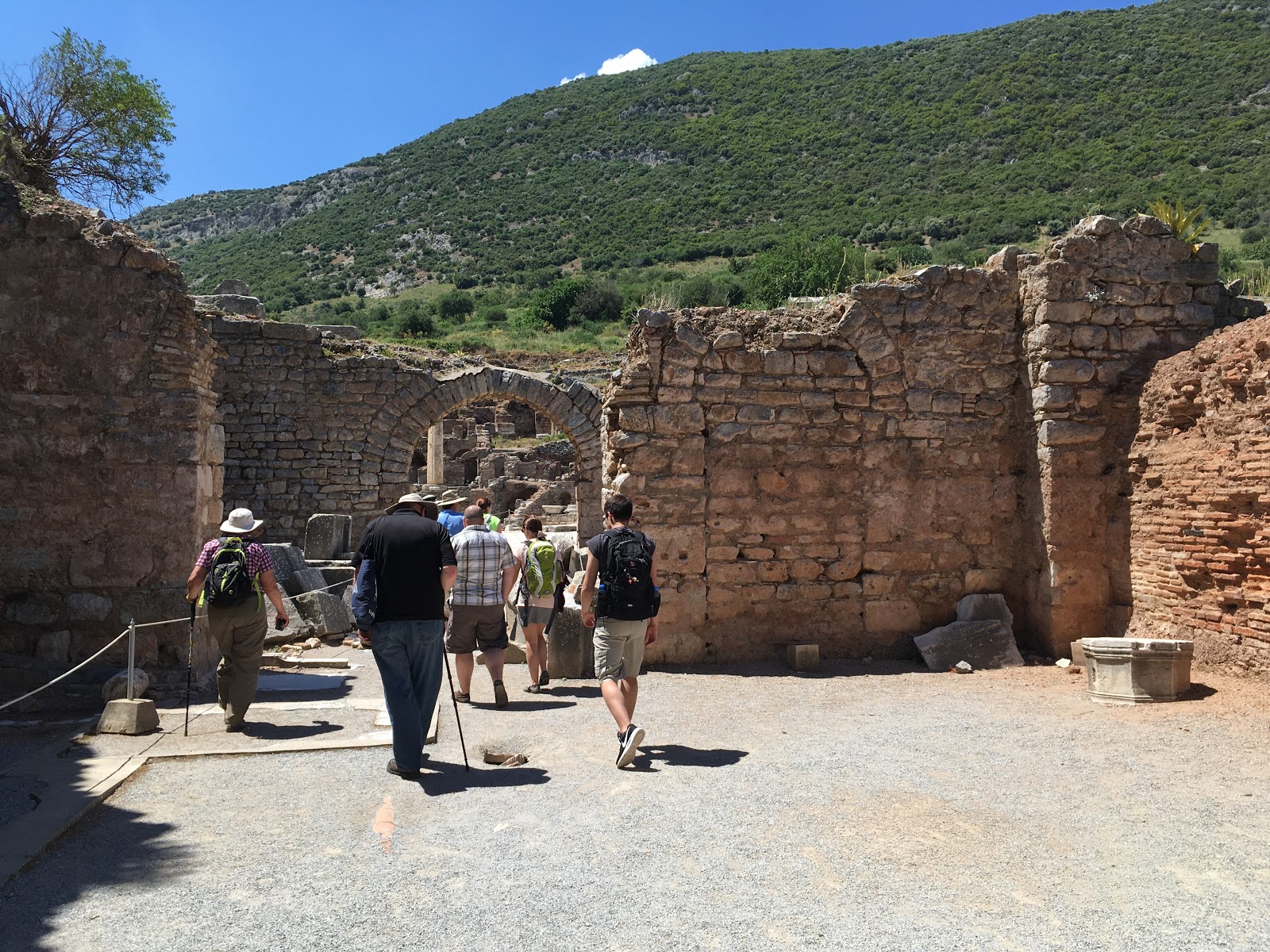
Scholastica Baths. These were public baths that were badly damaged in an earthquake, but then restored by a wealthy Christian named Scholastica, hence the name of the baths.
 |
| Scholastica's statue |
If I remember correctly, the room with Scholastica's statue was the dressing room; the next room is the frigidarium, or the room for the cold bath:
 |
| Frigidarium |
Next came the tepidarium, the room with the moderately warm bath:
And finally, fenced off, the caldarium, which is for the hot bath:
As per the guide, the people who visited this bath would begin in the frigidarium and work to the caldarium and then finish in the frigidarium again.
Remember earlier that I mentioned the Temple of Domitian? That does not mean it was a temple Domitian built - it means it was a temple used for worshiping the Emperor Domitian himself. The worship of emperors in Rome is called the Imperial Cult, and so far I've seen an imperial temple in two ancient cities (Ephesus and Pergamum). If you ever read a book about Diocletian or Constantine, the book will likely explain that refusing to offer incense to the emperor is what usually got Christians persecuted.
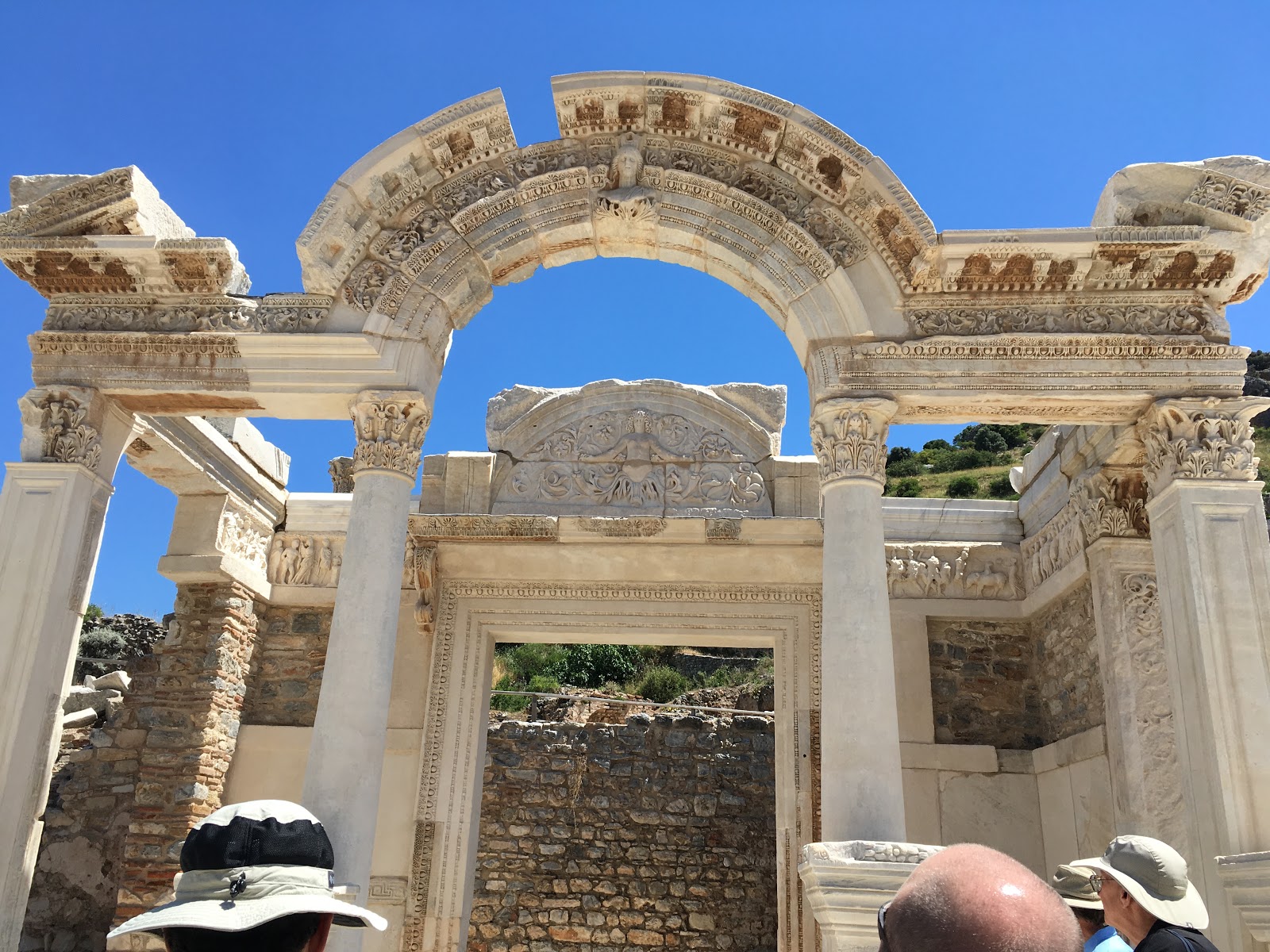
Below is the temple for another Imperial Cult, that of
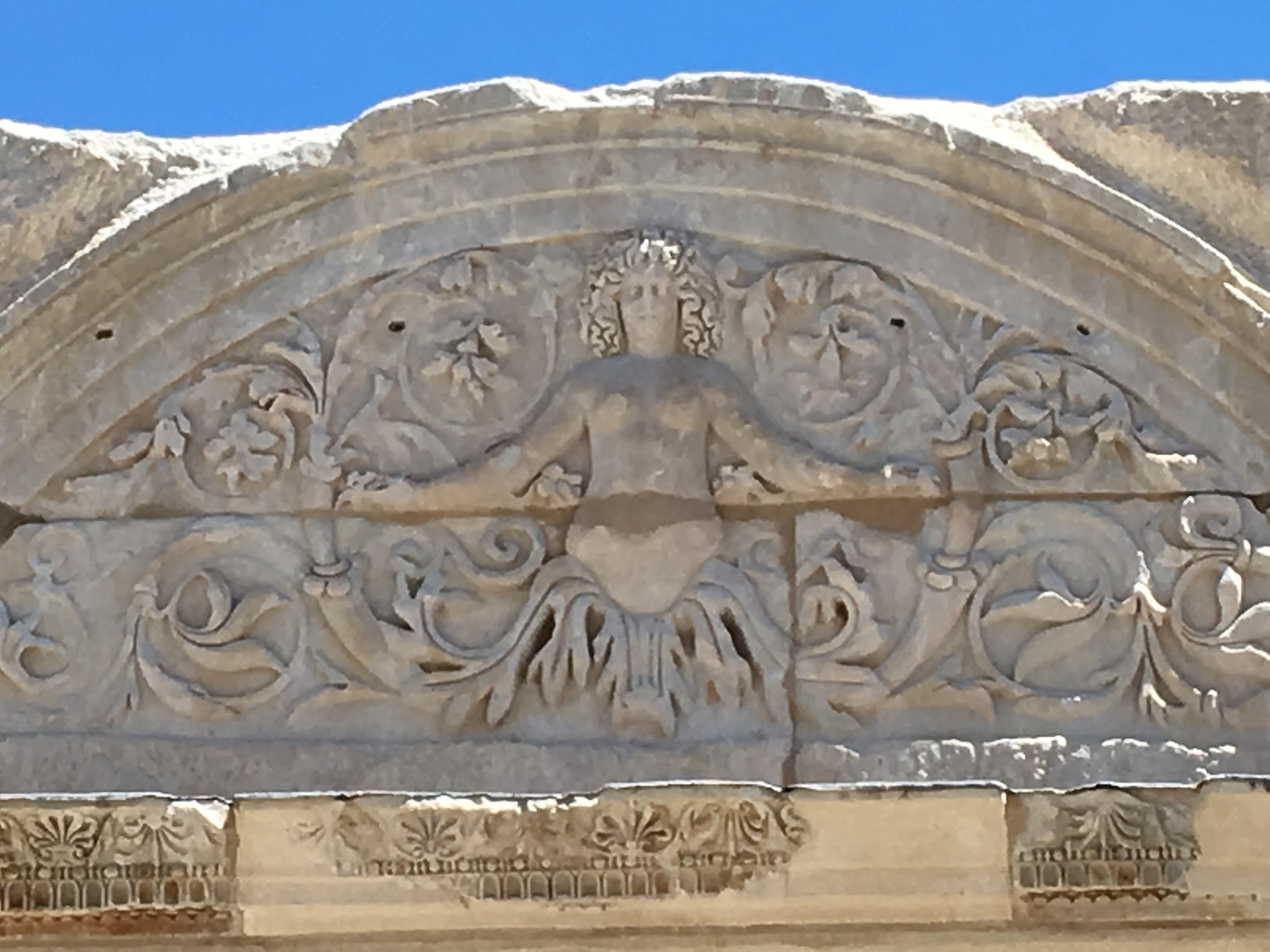
Hadrian. The two arches each have a different person: the outer arch, if I remember correctly, is Tyche, the goddess of luck. See if you can guess who the inner arch is:
The inner arch is Medusa, the snake-haired lady who would turn people to stone if they looked in her eyes. As per the guide, the statue was there to try to inspire visitors to look down in respect - because if they looked up disrespectfully, they might get turned to stone!
And, because I know there are at least some people reading this blog who will likely find this funny, here are the pictures of a public bathroom. If you want to know how it worked, leave a comment; otherwise, I'll just leave the pictures.